
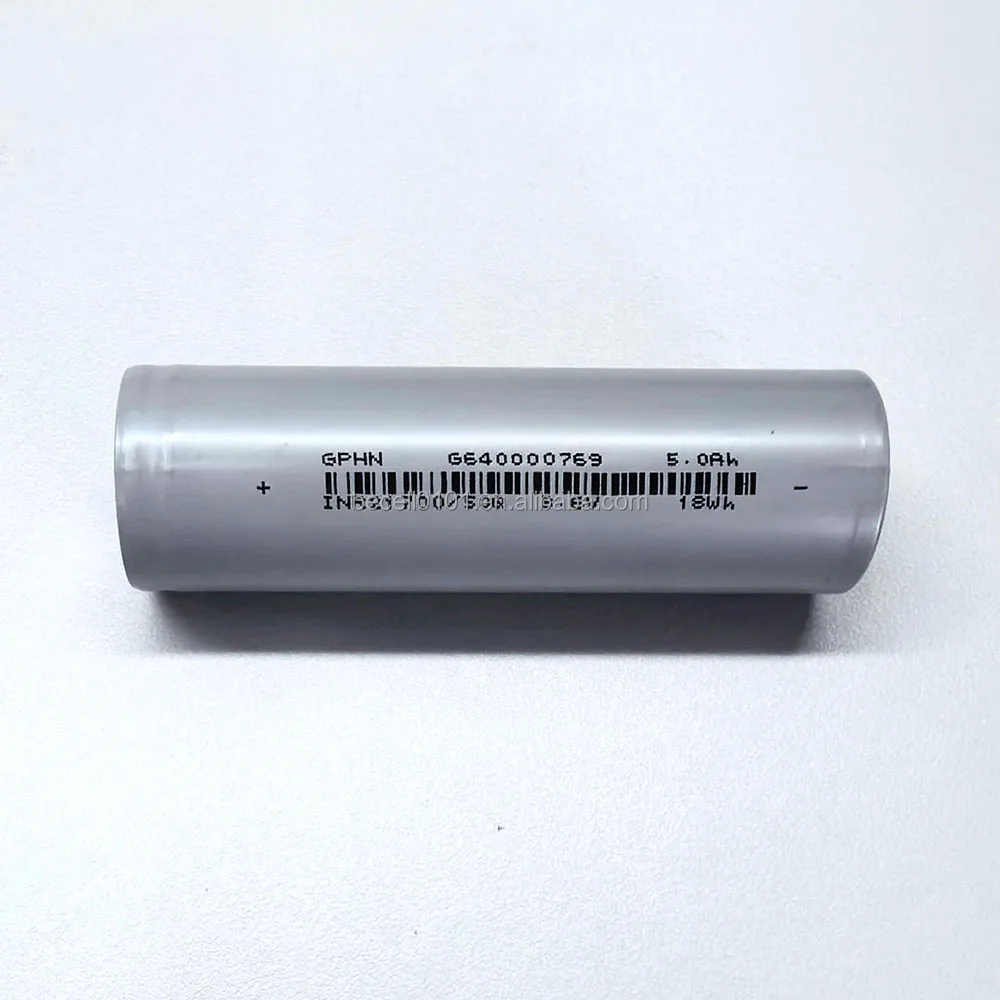
21700 battery 5000mAh – Great Power INR21700-50Q 50A High Discharge Cell
21700 battery 5000mAh – when sourcing one, purchasers often face a classic dilemma: capacity or power? Choose a high‑energy cell, and you sacrifice high‑rate performance with excessive voltage drop and heat. Choose a high‑rate cell, and capacity usually drops below 4000mAh. The INR21700-50Q by Great Power breaks that trade‑off, delivering 5000mAh nominal and 50A continuous discharge in a standard 21700 form factor – backed by 180A pulse and <5mΩ internal resistance.
Whether you are designing power tools, e‑bikes, drones, or energy storage systems, the INR21700-50Q offers a rare combination of high capacity and extreme power – without compromising on thermal performance or cycle stability.
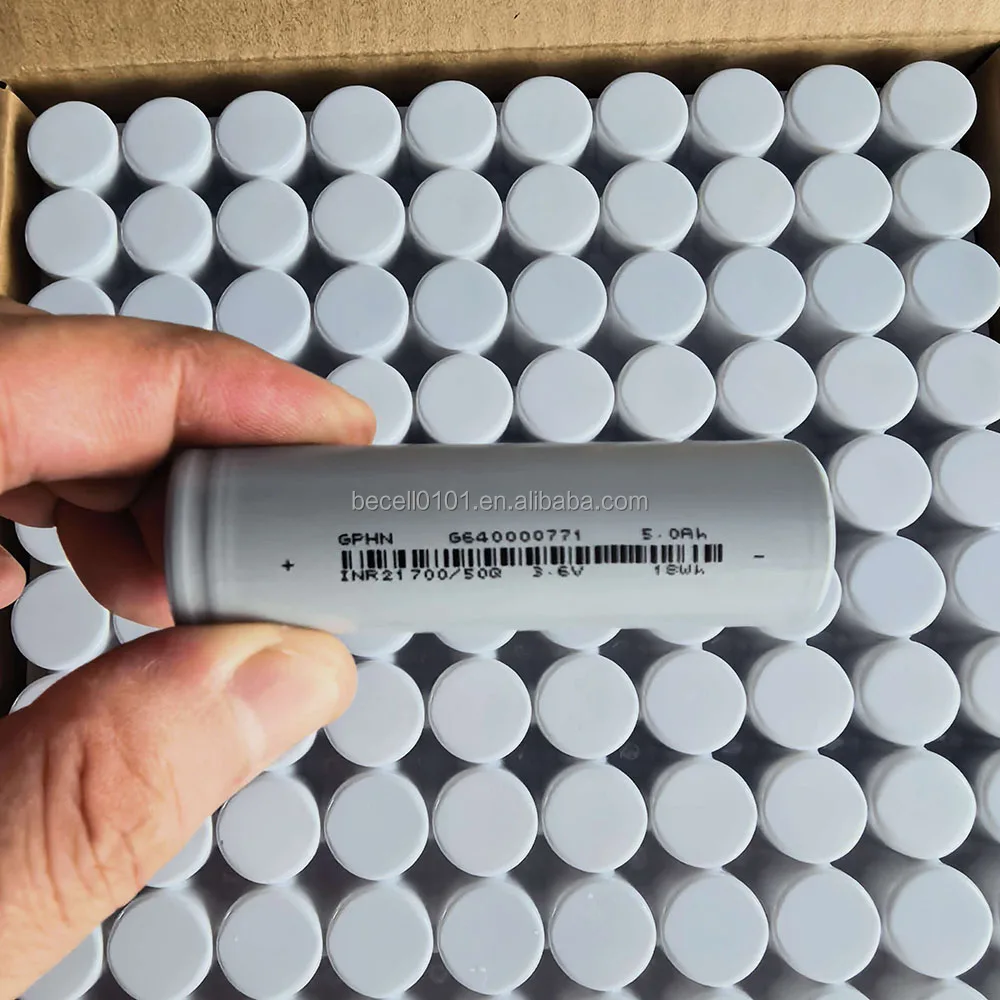
1. Capacity and Rate, Together: 5000mAh + 50A Continuous
For power tools, drones, e‑bikes, and energy storage systems, the battery must deliver both long runtime and sustained burst power.
The INR21700-50Q offers a nominal capacity of 5000mAh (minimum ≥4950mAh), placing it among the top tier in the 21700 category. At the same time, it supports a continuous discharge of 50A (10C) and can handle 125A instantaneous discharge (with 80℃ temperature cut‑off). Pulse discharge peaks at 180A for 2 seconds.
What does this mean in practice? A professional cordless circular saw can complete a full day of heavy cutting on a single charge, while still delivering instantaneous torque for the toughest loads – without voltage sag or premature shutdown.
Rate capability test (relative to 5A discharge as 100%):
| Discharge Current | C‑Rate | Capacity Retention |
|---|---|---|
| 5A | 1C | 100% |
| 20A | 4C | 96% |
| 30A | 6C | 97% |
| 40A | 8C | 95% |
| 50A | 10C | 90% |
Even at the extreme 50A (10C) discharge, retention stays at 90% – meaning minimal energy loss during high‑current output. Every milliampere‑hour is put to work.
2. Ultra‑Low Internal Resistance: Less Heat, Higher Efficiency
ACIR (internal AC resistance) <5mΩ; DCIR <20mΩ at 25℃ – this is another ace card of the INR21700-50Q.
The direct benefits of low internal resistance include:
- Lower heat generation during high‑rate discharge – reducing energy waste and improving overall system efficiency.
- Higher voltage plateau – equipment maintains strong power even near the end of discharge.
- Better cycle life – heat is the number one enemy of cell aging; low internal resistance keeps it under control from the start.
For purchasers, this translates into thinner thermal management designs and smaller gauge wiring in end products, lowering overall system costs.
3. Fast Charging: 15A Charge Current Shortens Downtime
In intensive work scenarios, charging time directly impacts productivity.
The INR21700-50Q supports a maximum continuous charge current of 15A (3C) . Combined with the standard 5A CC‑CV charging profile, it dramatically reduces charge windows. The specification also defines a pre‑charge mode for voltages between 1.0V and 3.0V with 0.1C~0.5C trickle recovery – giving a safe resurrection path for deeply discharged cells.
Note for BMS designers: Charging below 5℃ reduces capacity and cycle life. For low‑temperature conditions, the spec recommends charging at 0.2C (~1000mA). Clear boundaries are provided, reducing your validation efforts and risks.
4. Extreme Environment Tolerance: Discharge at -40℃, Charge at 60℃
The INR21700-50Q boasts an impressive operating temperature range:
| Condition | Temperature Range | Humidity |
|---|---|---|
| Charge | 0℃ ~ 60℃ | <75% R.H. |
| Discharge | -40℃ ~ 80℃ | <75% R.H. |
At -40℃ , the cell still delivers usable power (with cut‑off voltage adjusted to 2.0V). This means your end products – whether outdoor power supplies for Arctic regions or solar storage in desert environments – can operate reliably.
Discharge capacity at different temperatures (relative to 25℃ capacity as 100%):
- At 60℃, capacity remains 100%.
- At low temperatures, capacity drops gradually but remains available even at -20℃.
- When charge and discharge temperatures differ, the spec mandates a 3‑hour temperature soak – a critical detail for system thermal design.
5. Safety & Reliability: Passed Rigorous Tests
For overseas buyers, safety certifications are the gateway to target markets.
The INR21700-50Q has passed all the following safety tests, meeting the highest standard of No Explosion, No Fire:
| Test Item | Test Condition |
|---|---|
| Overcharge | 3C constant current to 10V or 1 hour cut‑off |
| Over‑discharge (forced) | 1C reverse charge for 90 minutes |
| External Short Circuit | Short with 5/10/20/80mΩ resistors for 10 min |
| Drop Test | 1.0m free fall onto concrete floor |
| Thermal Shock | 5℃/min ramp to 130℃, hold 30 min |
| Crush Test | 13KN hydraulic piston crush |
These tests cover core requirements of UL1642, IEC62133, and other international standards – giving you a solid foundation for product compliance.
6. Competitive Benchmark – How Does the INR21700-50Q Compare?
To help you make an informed sourcing decision, we have benchmarked the INR21700-50Q against the leading 5000mAh 21700 cells currently available on the market.
| Model | Max. Charge | Max. Discharge | ACIR | Discharge Temp. | Cycle Life |
|---|---|---|---|---|---|
| INR21700-50Q (Great Power) | 15A | 50A | <5mΩ | -40℃ ~ 80℃ | 300cyc @50A ≥60% |
| Samsung 50S | 6A (10A step) | 45A (80℃ cut) | ≤14mΩ | -20℃ ~ 80℃ | 250cyc @25A ≥60% |
| Samsung 50E | 4.9A | 9.8A | ≤35mΩ | -20℃ ~ 60℃ | 500cyc @5A ≥80% |
| LG M50LT | 3.36A (0.7C) | 14.4A (3C) | 9~21mΩ | -20℃ ~ 55℃ (ambient) | 1000cyc @2.4A ≥80% |
| EVE 50E | 10A (temp‑limited) | 15A (not for cycle) | ≤18mΩ | -20℃ ~ 70℃ | 1000cyc @5A ≥70% |
What This Means for Your Application
The INR21700-50Q delivers 50A continuous discharge – that is 3.3× higher than the EVE 50E, 5.1× higher than the Samsung 50E, and even outperforms the Samsung 50S (45A). Coupled with <5mΩ internal resistance, it generates significantly less heat at high loads – roughly 1/3 the heat of the 50S (14mΩ) and 1/13 of the EVE 50E (18mΩ) .
While some competitors quote longer cycle life numbers, those are measured under much lower currents – 2.4A to 5A, compared to our 50A test condition. For high‑power applications, the INR21700-50Q offers the best balance of capacity, power, and thermal efficiency.
7. Cycle Life: 300 Cycles ≥60% at 50A
In high‑power applications, cycle life is often the largest “hidden cost” – replacement frequency directly affects total cost of ownership for end users.
Under the severe test condition of 50A charge/discharge cycling (5A CC‑CV charge, 50A CC discharge to 2.5V or 75℃ cut‑off), the INR21700-50Q retains ≥60% capacity after 300 cycles.
Important: This is a highly demanding test. If your actual application runs at lower currents – e.g., e‑bikes typically draw 15‑20A, and storage systems 10‑30A – cycle life will be significantly longer. Always evaluate based on your real‑world duty cycle, not just the extreme test data.
8. Storage & Logistics Convenience
For cross‑border procurement, storage and shipping conditions are critical supply chain factors.
The storage specifications are:
| Storage Duration | Recommended Temperature | Humidity |
|---|---|---|
| < 6 months | -20℃ ~ 25℃ | <75% R.H. |
| < 3 months | -20℃ ~ 45℃ | <75% R.H. |
| < 1 month | -20℃ ~ 60℃ | <75% R.H. |
Delivery voltage is 3.3~3.5V (within 10 days of production) , which corresponds to approximately 30%~50% SOC – the recommended storage range. The spec also advises recharging once every six months for long‑term storage to prevent over‑discharge.
This means you do not need specialised storage facilities – a standard ambient warehouse meets the 6‑month requirement, significantly reducing supply chain complexity.
Conclusion
The INR21700-50Q is a well‑rounded, no‑compromise 21700 cell:
- Capacity – 5000mAh, industry‑leading.
- Power – 50A continuous / 180A pulse, matching professional‑grade high‑rate cells.
- Internal resistance – <5mΩ, excellent thermal control.
- Safety – passed 6 rigorous tests.
- Cycle life – 300 cycles @50A, longer under real‑world use.
- Temperature range – discharge from -40℃ to 80℃, covering most global climates.
Whether you are a power tool brand, e‑bike OEM, energy storage integrator, or drone/robotics developer, the INR21700-50Q deserves a place on your shortlist for your next design‑in.
For the full datasheet, samples, or a quotation, please contact Becell today:
📧 Email: info@becellbattery.com
🌐 Website: www.becellbattery.com
Our team is ready to support you with technical data, pricing, and delivery schedules.