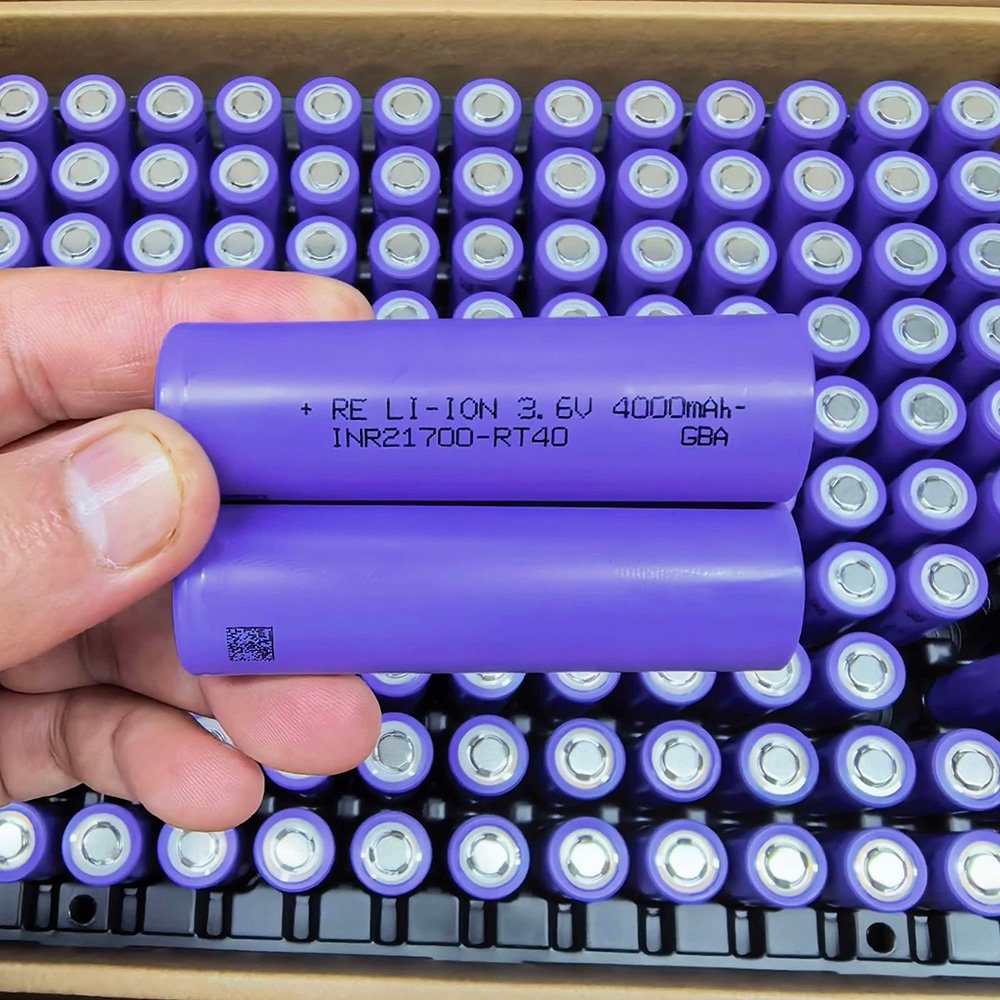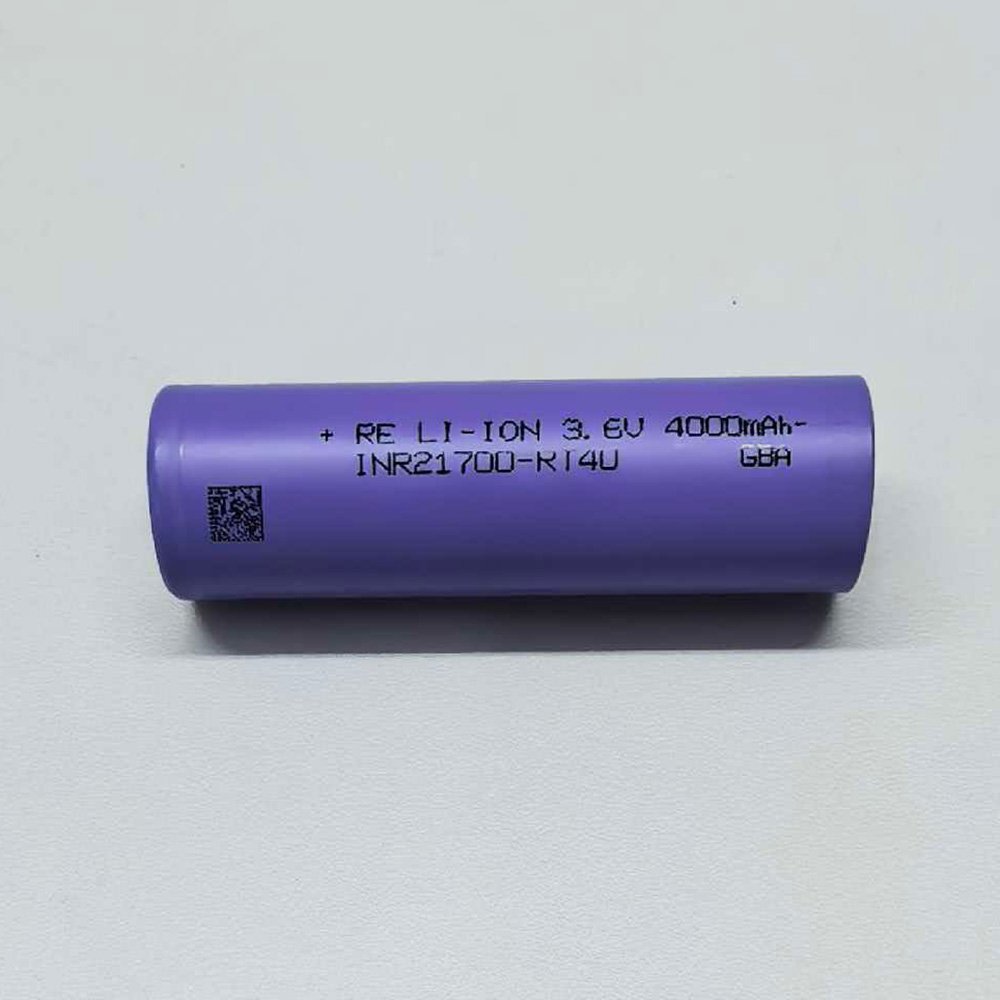
INR21700-RT40: 4000mAh, 16A Fast Charge, 50A/80A High-Rate 21700 Cell
HUIZHOU BECELL TECHNOLOGY CO LTD | Product News
A 21700 cell built for high current and wide temperature operation
If you are screening 21700 cells for power tools, garden equipment, drones, jump starters, or high-rate battery packs, the INR21700-RT40 offers a clear starting point. Specifically, it combines a 4000mAh-class capacity with 16A maximum charging, 50A/80A high-rate discharge, and an operating window from -40°C to 80°C.
Moreover, this cell does not chase a capacity number alone. Instead, it targets applications where high current, wide temperature range, and long cycle life must hold at the same time. The following notes draw on the A0 product specification and focus on the parameters that matter during cell selection and pack design.
Key specifications
| Item | INR21700-RT40 |
|---|---|
| Standard discharge capacity | ≥4000mAh (0.2C/0.8A to 2.5V at 25°C) |
| Nominal voltage | 3.60V |
| End-of-charge voltage | 4.20V |
| Discharge cut-off voltage | 2.50V (standard room-temperature condition) |
| Standard charge | 0.5C / 2A CCCV, 100mA cut-off |
| Maximum continuous charge current | 16A (4C fast charge) |
| Maximum continuous discharge current | 50A without temperature cut-off / 80A with 80°C temperature cut-off |
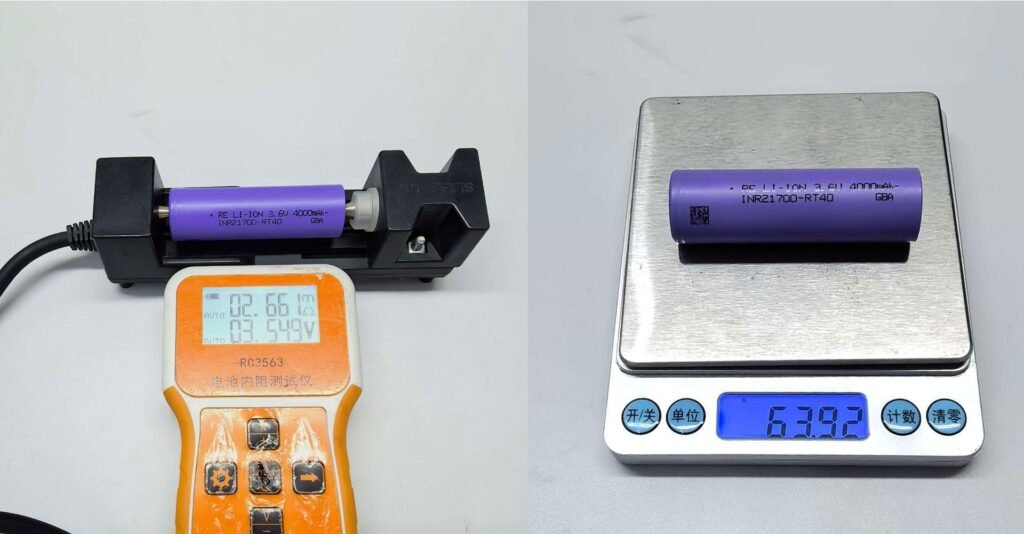
| AC internal resistance (ACIR) | ≤3.5mΩ at 1kHz |
| Weight | ≤67.0g |
| Dimensions | Max. diameter 21.25mm, max. height 70.35mm (with tube) |
| Shipping voltage | 3.51–3.57V |
Rate capability: ≥95% capacity retention at 50A discharge
Rate performance stands out as one of the most important characteristics of this cell. At 25°C, after charging at 2C/8A and discharging to 2.5V or an 80°C cut-off, relative capacity behaves as follows:
| Discharge current | 0.8A | 10–20A | 30–50A | 60A | 70A | 80A |
|---|---|---|---|---|---|---|
| Relative capacity | 100% | ≥96% | ≥95% | ≥90% | ≥60% | ≥50% |
Capacity retention remains at or above 95% up to 50A, and above 90% at 60A. Consequently, power tools, drone take-off and maneuvering loads, and high-current start-up do not have to sacrifice most usable capacity for rate capability. At 80A, the specification requires an 80°C temperature cut-off. Therefore, thermal management cannot be omitted, although the cell design boundary already covers this current level.
Fast charge: 16A is the maximum, but current must be derated by temperature
The specification defines a 4C/16A fast-charge condition. However, 16A is not available across the entire temperature range. Based on cell surface temperature, the maximum charging current is:
| Cell surface temperature | Maximum charging current |
|---|---|
| 15°C ≤ T ≤ 60°C | 16A |
| 0°C ≤ T < 15°C | 8A |
| -10°C ≤ T < 0°C | 2A |
| -20°C ≤ T < -10°C | 0.5A |
BMS designers should write this table directly into the charging strategy. Charging at 16A at low temperature would exceed the specification boundary. By contrast, applying a single 0.5A limit across all conditions would waste fast-charge capability at room temperature. Temperature-dependent current derating therefore becomes the key to balancing safety and user experience.
The specification separates ambient temperature from surface temperature. The ambient charging range is -20°C to 45°C, the surface-temperature charging limit is 60°C, and BECELL recommends a recharge release temperature below 45°C. Accordingly, BMS temperature sensor placement and recovery logic should align with these conditions.
Wide-temperature discharge: usable at -40°C, with a separate low-temperature cut-off voltage
Discharge capability matters just as much. Using the 25°C, 50A discharge capacity as the 100% baseline:
| Discharge temperature | -40°C | -20°C | -10°C | 0°C | 25°C | 45°C |
|---|---|---|---|---|---|---|
| Discharge current | 8A | 50A | 50A | 50A | 50A | 50A |
| Cut-off voltage | 2.0V | 2.0V | 2.0V | 2.0V | 2.5V | 2.5V |
| Relative capacity | ≥85% | ≥90% | ≥92% | ≥95% | ≥100% | ≥90% |
The cell delivers more than 85% capacity at -40°C, and 50A discharge retains 90%–95% from -20°C to 0°C. This directly benefits cold-region outdoor equipment, cold-chain logistics, and winter jump starters. Notably, the discharge cut-off voltage is 2.0V at 0°C and below, while it is 2.5V at room temperature. A BMS that applies 2.5V universally will sacrifice low-temperature usable capacity; conversely, a BMS that applies 2.0V universally will not match the room-temperature specification. Therefore, the cut-off voltage must switch with the temperature strategy.
Cycle life and storage: 1500 cycles / 800 cycles, ≥80% capacity retention
The specification provides two cycle paths. First, 2C/8A charge + 50A discharge, 1500 cycles, capacity retention ≥80%. Second, 4C/16A fast charge + 50A discharge, 800 cycles, capacity retention ≥80%.
For storage, after 30 days at 60±3°C, retained capacity is ≥80% and recovered capacity is ≥90%. BECELL recommends these long-term storage conditions: 1 year at -20°C to 25°C; 3 months at -20°C to 45°C; 1 month at -20°C to 60°C.
For buyers evaluating total cost of ownership, these two cycle datasets matter more than a single capacity figure. High-rate applications can reference the 50A cycle path, while fast-charge-priority applications can reference the 16A cycle path. In both cases, the specification defines a clear retention floor.
Safety and mechanical validation
The specification lists UN38.3 vibration, IEC62133 free drop, and UL1642 crush tests. The criteria are clear: no leakage and less than 10% OCV drop after vibration; no fire or explosion after drop; and release after compression to 13±1kN. In addition, the safety test list covers 2C 6V overcharge, forced discharge, short circuit, and heating test.
For procurement evaluation, request the complete 26-page specification and the corresponding safety test reports at the initial screening stage. Then compare the cell parameters against the end-product certification requirements item by item.
Suitable applications
Based on the parameters above, the INR21700-RT40 fits several application groups:
- Power tools and garden equipment: high-rate discharge within 50A, with ≥95% capacity retention, balancing runtime and power;
- Drones and professional UAVs: 16A fast charge shortens turnaround time, while high-rate discharge supports take-off and maneuvering loads;
- Jump starters and emergency power: -20°C to -40°C low-temperature discharge capability for cold-region readiness;
- High-rate energy storage packs and portable power stations: 1500-cycle retention ≥80% makes lifecycle cost calculable;
- Industrial equipment and specialty vehicles: wide-temperature charge and discharge boundaries cover outdoor and variable-temperature operation.
If your application falls outside these categories, provide the operating current profile, ambient temperature range, and target cycle count to the BECELL team. This information lets BECELL check the cell specification against your BMS strategy and thermal design.
Next step: request the full specification and sample evaluation
The complete specification includes dimension drawings, safety test clauses, and pack design notes. BECELL recommends that hardware and procurement teams review it together.
Request the full specification sheet and sample evaluation
Provide your application, target discharge current, and temperature conditions. BECELL can then help confirm the matching boundary between the cell and your BMS.
HUIZHOU BECELL TECHNOLOGY CO LTD
Start with the cell specification, and define your battery pack design boundary at the screening stage.
🌐 Website: www.becellbattery.com