
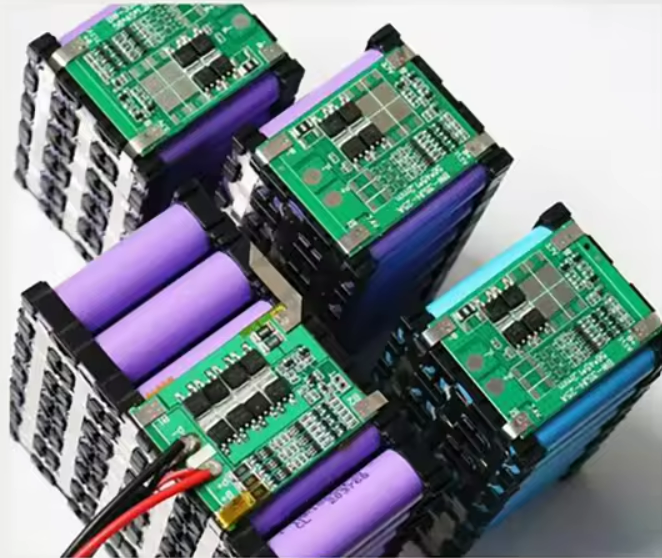
E-Bike Battery Cell Selection:Two Basic Concepts to Understand First
E-bike battery cell selection is one of the most critical decisions for manufacturers, as 21700 batteries dominate one of the largest market segments. If you supply battery cells to e-bike manufacturers, you‘ve probably heard this question more times than you can count:“Which cell should I use for my e-bike?”
At first glance, it sounds simple. But behind it lies a series of interconnected decisions——battery pack voltage, motor power, range requirements, and budget. Every factor influences the final choice of cell.
This guide targets overseas buyers and procurement professionals who need a clear, practical framework for selecting the right 21700 cell for their e-bike projects.
Voltage and Capacity:The Two Fundamentals
Voltage determines speed. Capacity determines range.
An e-bike battery pack typically uses cells arranged in series and parallel connections.
- Series (S) determines voltage: 13S = 48V, 17S = 60V, 20S = 72V
- Parallel (P) determines capacity: 2P = around 10Ah, 4P = around 20Ah
For example, a 48V/20Ah battery pack typically uses a 13S4P configuration—52 cells total. Each cell provides 3.6V/5Ah (based on a 5000mAh cell), 13 in series gives about 48V, and 4 in parallel gives about 20Ah.
The motor voltage determines the number of series connections—once that‘s set, it doesn’t change. The number of parallel connections depends on the target range and can be adjusted flexibly. In addition, the discharge capability of each cell directly affects the entire pack‘s output performance.
Here’s the key takeaway for cell selection: series count relates to cell voltage, parallel count relates to cell capacity, but both configurations depend on the cell‘s discharge capability to deliver the power the motor actually needs.
Matching Cells to Motor Power Levels
To start with, e-bike motors generally fall into several power tiers. Each tier has different current draw characteristics, which directly determine which cell is most suitable.
250W-500W Level:Samsung 50E
At this level, the motor continuously draws 10-15A, with peaks under 20A. 5000mAh capacity gives you a major advantage in range, and the 9.8A continuous discharge covers the requirement comfortably. For commuter e-bikes at this power level, the 50E makes the most logical choice——large capacity, long cycle life, and the most affordable price point.
500W-750W Level:Samsung 50S
Motor current rises to 15-25A. The 50E‘s 9.8A, however, is no longer sufficient. The 50S delivers 25A continuous (45A with temperature cutoff) while retaining 5000mAh capacity. For this tier, the 50S offers the best balance of capacity and power.
750W-1000W Level:Samsung 40T or Molicel P42A
Motor current typically sits in the 25-35A range, with occasional spikes above 40A. For this tier, two viable options exist.
The 40T fits applications where the sustained draw stays under 35A——it offers Samsung brand, solid performance, and stable supply. The P42A fits higher-power applications (35-45A) or projects where longer cycle life is a priority. Ultimately, the decision comes down to one question: if the 40T is sufficient, it‘s the more cost-effective choice. If the project demands more headroom, the P42A earns its higher price.
1000W+ / High-Performance Level:Molicel P50B
At this level, current draw frequently hits 40-60A. There’s little room for compromise here——only the P50B delivers stable 60A output among 5000mAh cells. It costs more, yet at this power tier, there‘s no alternative.
How Pack Capacity Affects Cell Selection
When it comes to pack capacity, the same cell model can be used differently depending on how many cells are connected in parallel. Using a 48V (13S) pack as an example:
48V/10Ah(13S2P): Each cell provides 5Ah, so 2P delivers 10Ah. This is a smaller pack that prioritizes weight savings over range. The 50E or 50S is ideal here, offering the best balance of capacity and cost.
48V/15Ah(13S3P): With 3 cells in parallel, the current demand per cell is reduced. This opens up options like the 40T, especially for mid-power applications where the 35A discharge is more than adequate.
48V/20Ah(13S4P): More cells in parallel distribute the discharge current. For motor power below 750W, the 50E still works well. For motor power above 1000W, however, the 50S or P42A is strongly recommended.
Thermal Management in E-Bike Battery Cell Selection
E-bike battery packs typically sit inside the bike frame or a sealed battery case. The issue is that heat dissipation is limited. When cells discharge at high rates, heat builds up. As a result, if that heat can‘t escape, capacity degradation accelerates.
For high-power builds (1000W+), we strongly recommend designing the battery pack with heat dissipation in mind even when using high-performance cells like the P50B or P42A.
Specific recommendations:
- Leave at least 1mm gap between cells for airflow
- Design ventilation channels or use thermally conductive materials in the battery case
- Consider the location of the battery pack relative to heat sources like the motor and controller
Cost vs. Performance in E-Bike Cell Selection
Finally, here’s how each cell positions in the e-bike market:
| Cell Model | Price | Capacity | Discharge | Best For |
|---|---|---|---|---|
| Samsung 50E | Lowest | 5000mAh | 9.8A | 250W-500W commuter e-bikes |
| Samsung 50S | Mid | 5000mAh | 25A / 45A | 500W-750W, most versatile |
| Samsung 40T | Mid-Low | 4000mAh | 35A / 45A | 750W-1000W, brand-driven projects |
| Molicel P42A | Mid-High | 4200mAh | 45A | 750W-1000W, performance & cycle life |
| Molicel P50B | Highest | 5000mAh | 60A | 1000W+ high-performance builds |
Quick E-Bike Battery Cell Selection Guide
| Motor Power | Recommended Cell | Why |
|---|---|---|
| 250W-500W | Samsung 50E | Largest capacity, longest life, lowest cost |
| 500W-750W | Samsung 50S | Retains capacity, delivers more power, most versatile |
| 750W-1000W | Samsung 40T / Molicel P42A | 40T for cost-effective builds, P42A for higher performance |
| 1000W+ | Molicel P50B | 60A continuous discharge, no alternative at this level |
The Bottom Line for E-Bike Battery Cell Selection
E-bike battery cell selection follows a straightforward logic: motor power determines discharge requirements, discharge requirements determine the cell model, and range targets determine pack capacity.
Get these three factors clear, and your e-bike battery cell selection process becomes significantly easier.
For samples, pricing, or application-specific recommendations, contact BECELL today. We stock all five cells in large quantities——Samsung 50E, 50S, 40T, Molicel P42A and P50B.