
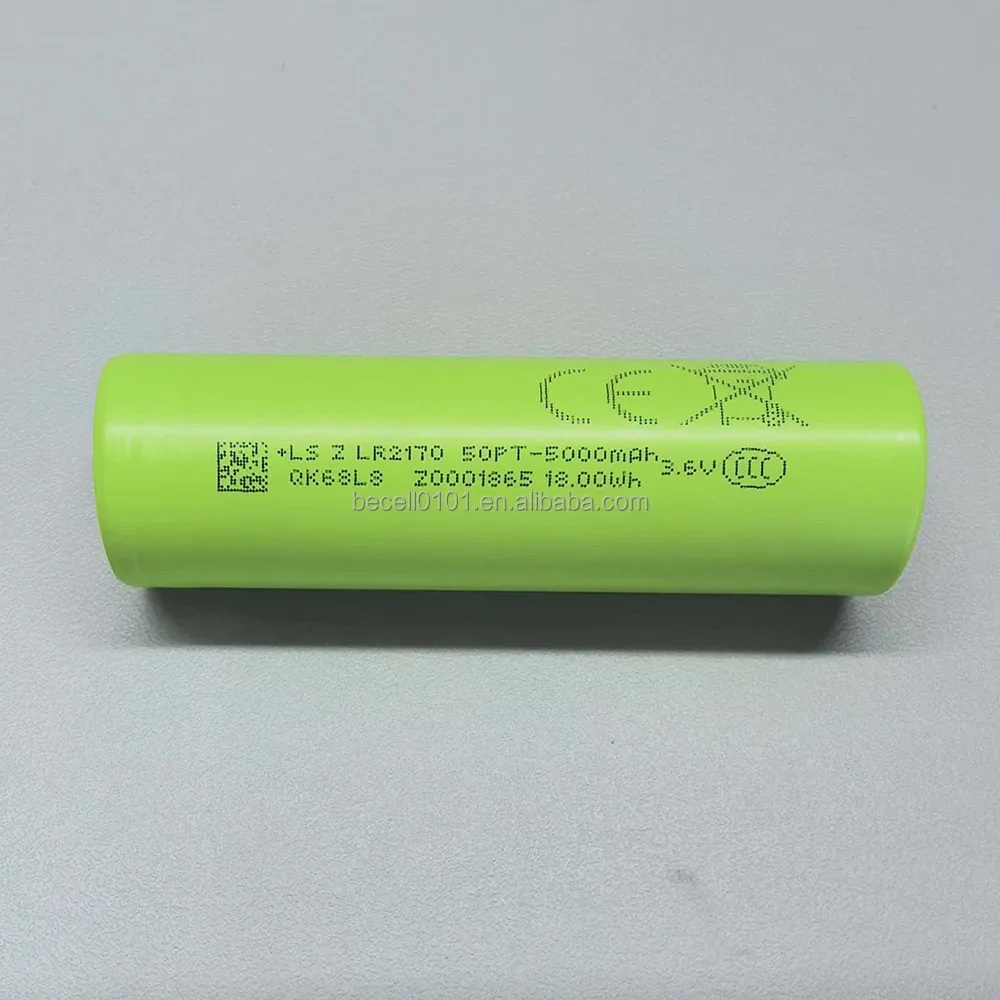
High Discharge 21700 Battery Cell: What OEMs Actually Need to Know Before Mass Production
High discharge 21700 battery cell sourcing is more complicated than comparing datasheets. If you have spent the last few months selecting lithium-ion cells for your new product line, you have probably already realized this. The listings all look impressive at first glance. But once you scale up to mass production or run real-world stress tests, the gaps start to show. Capacity drops faster than expected. Safety margins feel thinner than they should be. And suddenly, your entire supply chain feels like it is balancing on a very narrow edge. That is exactly why LISHEN developed the LR2170 50PT high discharge 21700 battery cell —to give you the consistency and thermal stability your production line actually needs.
That is exactly why we are having this conversation today.
For procurement managers and R&D leaders in the power tool, light electric vehicle, and stationary storage sectors, selecting a reliable high discharge 21700 battery cell is rarely just about checking a spec box. It is about consistency. It is about thermal stability under continuous load. And above all, it is about knowing that the cell you qualified in the lab will perform identically across every single batch that arrives at your factory door.
So, let us take a closer look at a cylindrical cell that was designed with exactly those concerns in mind—the LR2170 50PT.
When High Discharge Becomes a High-Stakes Game
One of the most common pain points we hear from overseas buyers is this: the cells they test in small samples handle high-current discharge beautifully, but once they are enclosed inside a battery pack with limited airflow, things start to go sideways.
Heat is the silent enemy of lithium-ion chemistry. And when you are drawing currents anywhere near 40A or 50A continuously, that enemy becomes very loud very quickly.
Here is where the LR2170 50PT takes a noticeably different approach. Instead of simply listing an impressive peak current on paper, this high discharge 21700 battery cell incorporates clear, practical thermal management thresholds. The discharge cuts off when the surface temperature reaches 80°C and resumes only after cooling to 50°C. For a cell that genuinely prioritizes real-world usability, this is not a limitation—it is a safety net.
After all, a cell that self-protects is a cell that lasts longer and keeps your end-users safer.
Cycle Life That Matches Your Product Lifespan
Let us talk about something that keeps procurement teams awake at night: premature replacement costs.
If you are designing a premium cordless power tool or a light EV that carries a multi-year warranty, you cannot afford to have your battery degrade to 60% of its original capacity after just a few hundred cycles. Your brand reputation depends on longevity.
Under a demanding 40A discharge regimen, this 5000mAh cylindrical battery maintains 60% of its first-cycle capacity after 500 cycles. At a more moderate 10A discharge—which is far more representative of many typical applications—that milestone extends all the way to 1000 cycles.
What does that mean in plain business terms?
It means your customers stay satisfied for longer. It means fewer warranty claims. And it means you can confidently position your product in a premium segment without worrying that the battery will become the weakest link in your value chain.
The Hidden Cost of Inconsistent Supplier Quality
If there is one conversation we have had more than any other with overseas clients, it is about batch-to-batch variation. Nothing disrupts a production schedule like suddenly having to recalibrate your BMS parameters because a new shipment behaves differently from the previous one.
A reputable 21700 lithium-ion cell provider does not just deliver impressive single-cell data. It delivers uniformity.
The LR2170 50PT is manufactured under strict quality control protocols that ensure minimal deviation in internal resistance, capacity, and self-discharge rate across production batches. For manufacturers building multi-cell parallel or series configurations, this consistency is absolutely non-negotiable. Voltage differences across cells should remain within 10mV and internal resistance within 4mΩ during assembly—and that kind of precision starts with a manufacturer who understands that your production line is not a testing ground.
Why Fast Charging Is No Longer a Luxury
Let us be honest. The modern user expects fast charging. Whether it is a construction professional who needs to get back to work quickly or an e-bike commuter who does not have all night to wait, charging speed has become a decisive purchasing factor.
Yet many battery suppliers still treat fast charging as an afterthought—something you can do occasionally but not repeatedly without damaging cycle life.
This high drain battery supports up to 15A continuous charging current under optimal temperature conditions. That is 3C charging capability, which translates to significantly reduced downtime for your end-users. More importantly, the specification clearly outlines how charging current should be adjusted based on ambient temperature—2.5A below 15°C, 15A between 15°C and 40°C, and 8A up to 50°C.
This level of transparency is exactly what you want from an EV battery cell manufacturer that actually understands thermal dynamics rather than simply chasing marketing-friendly numbers.
Safety Is Not Just a Certification Checkbox
We have all seen the headlines. Battery fires sell newspapers, but they destroy companies. As an overseas importer or OEM manufacturer, you are not just responsible for the cell itself—you are responsible for the entire system that houses it.
The rigorous safety testing behind this 21700 cylindrical cell is worth noting. External short-circuit, overcharge, over-discharge, thermal abuse, and crush tests all return the same result: no fire, no explosion.
That is reassuring, certainly. But what is equally important is the design guidance that accompanies this rechargeable Li-ion cell. The specification encourages pack designers to include over-temperature protection, voltage balancing, and even thermal propagation prevention. For buyers who may be assembling packs in-house, this level of application-oriented support can be the difference between a smooth product launch and a costly recall.
Storage and Logistics: The Overlooked Variables
Here is something that rarely makes it into the glossy brochures but matters enormously to anyone managing international freight: storage conditions.
This cell is shipped at 20% to 30% state of charge, which is ideal for air and sea transport. But the real value lies in the detailed storage recommendations—ranging from 1 month to 12 months, with specific temperature and humidity thresholds for each period.
If you have ever received a shipment of cells that underperformed because they sat in a humid warehouse too long, you will appreciate the attention to detail here. The recommendation to perform a charge-discharge cycle every six months during long-term storage is not just a nice suggestion; it is a practical tool to maintain cell health and ensure your inventory remains viable.
A Partnership Mindset Rather Than a Transaction
At the end of the day, choosing a power tool battery solution provider is about more than comparing datasheets. It is about finding a partner who respects your production timeline, understands your end-user expectations, and stands behind their product with transparent warranty terms.
The LR2170 50PT carries a 12-month warranty from the shipping date, with a thoughtful provision that if cycle life exceeds 300 cycles within that period, the warranty adjusts accordingly. This is not legalese. It is a reflection of real-world usage patterns, acknowledging that some applications will naturally cycle faster than others.
Equally important is the explicit guidance on what falls outside warranty coverage—misuse, improper installation, storage contrary to specifications. Clear boundaries protect both parties and prevent misunderstandings down the road.
Is This the Right High Discharge 21700 Battery Cell for Your Next Project?
Every procurement decision involves trade-offs. The LR2170 50PT will not be the cheapest cell on the market, nor does it pretend to be. But for OEM manufacturers and brand owners who prioritize thermal stability, long-term cycle consistency, and comprehensive safety engineering, it represents an exceptionally well-balanced choice.
The high discharge capability covers demanding power tool applications. The 5000mAh capacity provides meaningful energy density for compact EV battery designs. And the thoughtful thermal management features give pack integrators the flexibility they need to design safe, reliable systems.
Ultimately, the best specification in the world is meaningless without reliable supply and consistent quality. If you are looking for a high drain battery pack solution that genuinely supports your manufacturing rhythm and protects your brand reputation, this cylindrical lithium-ion cell deserves your serious consideration.
Take a closer look at the datasheet, but more importantly, consider the real-world conditions your products will face. Because that is exactly where the LR2170 50PT was designed to perform.
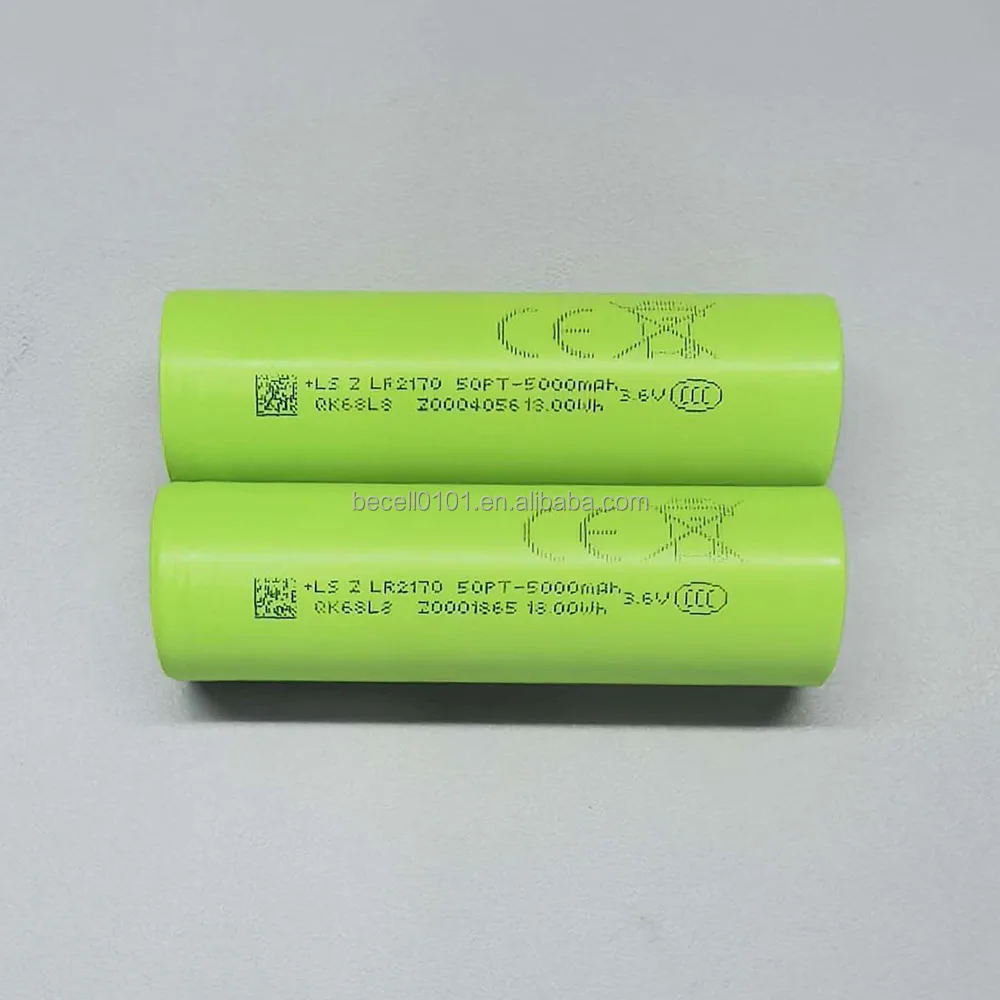
Interested in how this 21700 battery cell fits your next project? Contact us For more detailed electrical specifications, cycle life curves, or packaging dimensions, please refer to the official product specification or contact our technical support team. We are happy to help you evaluate whether this high discharge 21700 battery cell aligns with your specific application requirements.
📧 Email: info@becellbattery.com
🌐 Website: www.becellbattery.com